Sendb00ks
Sendb00ks Metamorphoses: Inès di Folco Jemni
Sendb00ks Metamorphoses: Inès di Folco Jemni
First posted July 2026
£23.40 for members
Sale Sold outCouldn't load pickup availability
Metamorphoses, Books I–III
by Ovid
Translated by Brookes More (1922)
Introduction by Gemma Janes and Bianca Pozzi
Book design by Rana Tabatabaie
Edited by Madeleine Willis
Sleeve design by Inès di Folco Jemni
Made in 2026. Sleeves designed at Castello di Rocca Sinibalda, Lazio
Books I to III of Ovid's Metamorphoses in Brookes More's 1922 blank verse translation, published by Sendb00ks with an introduction by Gemma Janes and Bianca Pozzi.
This edition comes with a detachable sleeve by Inès di Folco Jemni. The six sleeves in the series were designed during the Sendb00ks residency at Rocca Sinibalda, Lazio, in June and July 2026.
The first volume of a five-year Sendb00ks project to publish all fifteen books of the Metamorphoses.
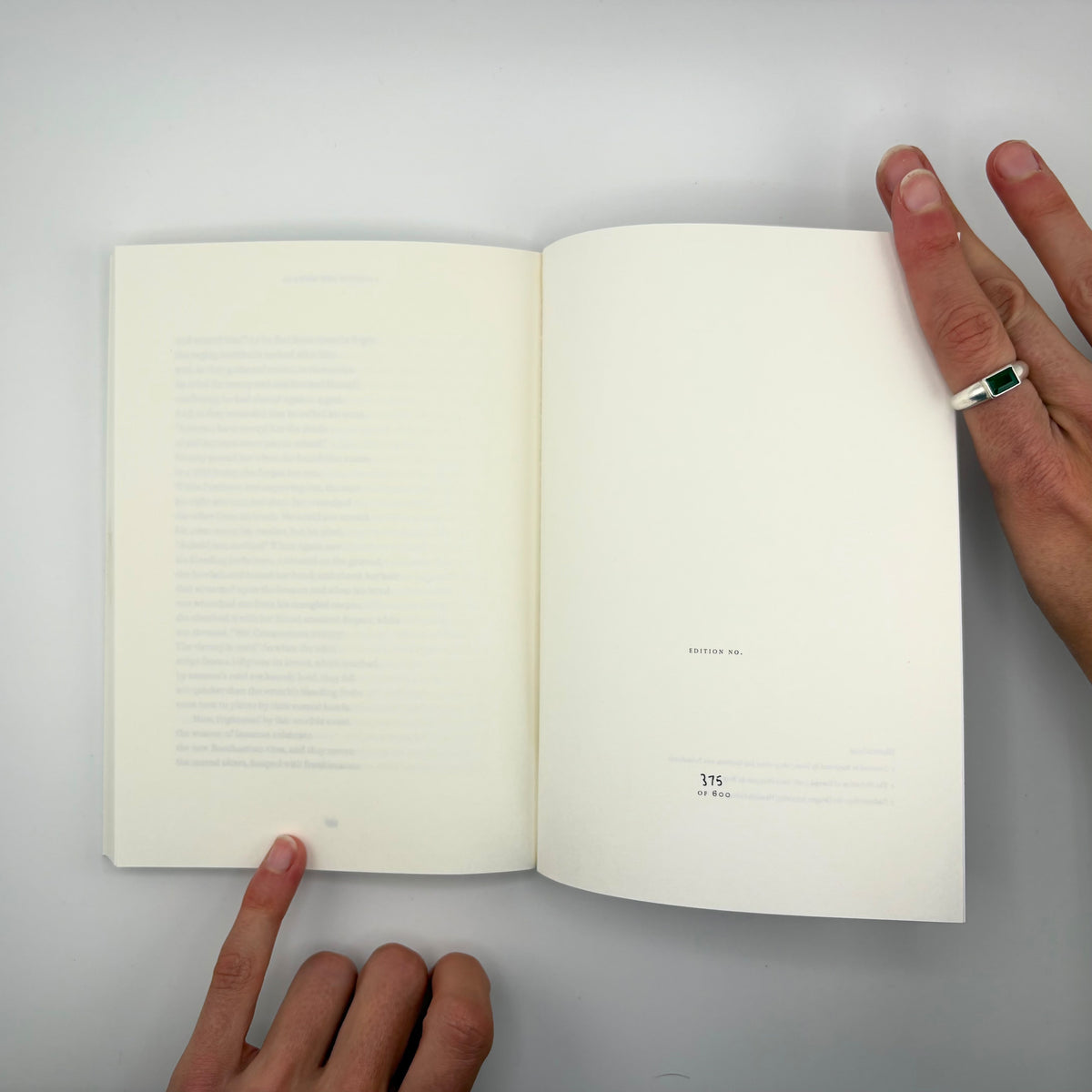
Limited edition of 600.
Almost 40 years after the fall of Cleopatra, under the imperial reign of Augustus, Ovid, at the height of his poetic fame, was banished from Rome. Mystery shrouds the reason for his punishment, but in 8CE he was sent to Tomis, on the Black Sea. Without a library or companions, he was left with an unfinished poem that he still meant to polish. Ovid claims to have burnt his copy upon leaving Rome; and yet, the Metamorphoses survives. As the most comprehensive book of myths of all time, the poem’s legacy spans the fall of empires, ecological disasters, and technological advancements whereby the powerful seek to become biological containers for the immortal. Defying time and age, it remains a seed, forever remaking itself in the reader.
Now, more than 2,000 years after the poem’s completion, from the scorpion-shaped fortress of Rocca Sinibalda in the Turano Valley, Sendb00ks presents 600 limited-edition copies of Ovid’s Metamorphoses, each with a detachable sleeve created by one of six artists-in-residence. Tali Lennox, Elsa Rouy, Jan Melka, Inès di Folco Jemni, Okiki Akinfe, and Mathilde Albouy return to a narrative whose influence abounds to consider transformation through paint and sculpture. In their hands, the myths are morphing once again.
From the introduction by Gemma Janes and Bianca Pozzi
Share