Sendb00ks
The Cosmic Egg and Other Writings by Hildegard of Bingen with a Sleeve by Pegah Farahmand
The Cosmic Egg and Other Writings by Hildegard of Bingen with a Sleeve by Pegah Farahmand
Couldn't load pickup availability
The Cosmic Egg and Other Writings
by Hildegard of Bingen
Translated into English by Roberto Salazar Morales
Introduction by Ollie Cowley
Edited by Madeleine Willis
Chosen by Pegah Farahmand, with her sleeve Nature’s Games
Each book has been hand-numbered.
Abbess, composer, healer and visionary, Hildegard of Bingen (1098–1179) was three years old when she had her first vision. Over her life she wrote theology, music, medicine and natural philosophy, and invented a language of her own, the lingua ignota.
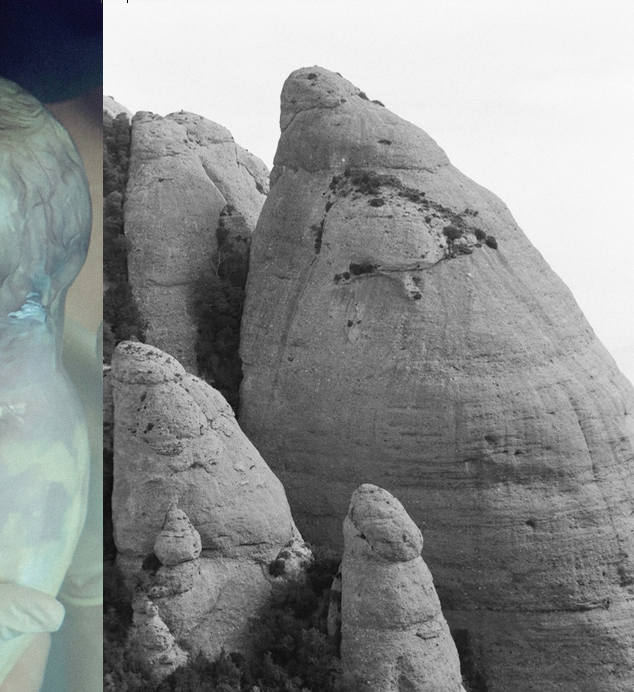
The book was chosen by Pegah Farahmand, her sleeve was inspired by a trip to Montserrat, “where the strange, phallic formations of the mountain range rise around a Benedictine monastery founded in 1025”. There she found “two forms of the sacred: one constructed through religion and ritual, the other embedded in the landscape”. She began to think about “how pilgrimage has continued into contemporary culture—its secular evolution”. Drawing on Victor Turner’s “betwixt and between”, the Sufi thought she grew up with, and the clay vessels of Omar Khayyam’s Rubāʿiyāt, her works Iron Mountain and Caul answer Hildegard’s cosmic egg.
This edition gathers five of Hildegard’s writings in a new English translation from the medieval Latin by Roberto Salazar Morales: her letter to Bernard of Clairvaux, The Action of the Will, The Cosmic Egg, The Iron Mountain and A Vision of Love. Illuminations from the Scivias and the Book of Divine Works accompany the texts. Ollie Cowley’s introduction follows Hildegard’s green thread from the monastery at Disibodenberg to her letters to popes and emperors, and into the thousand nouns of her unknown language.
First edition of 400 copies · Design by Maria Candanoza · Printed in the Czech Republic · Sendb00ks, London 2026
Released on 21 November 2026 in Paris, with a reading by Pegah Farahmand.
Share